Hedge cutting in Flackwell Heath
Our work · August 2025
The job
Hedge trimming in Flackwell Heath
The brief
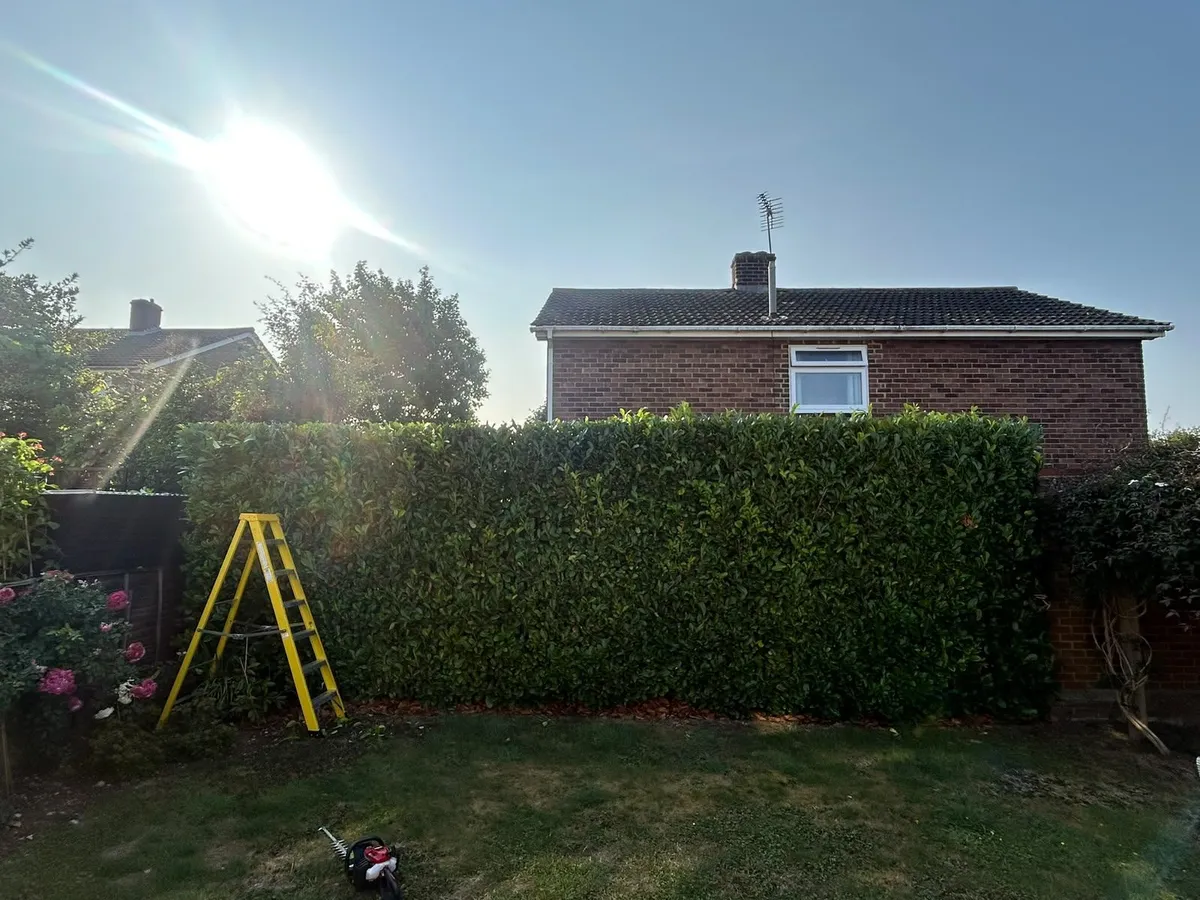
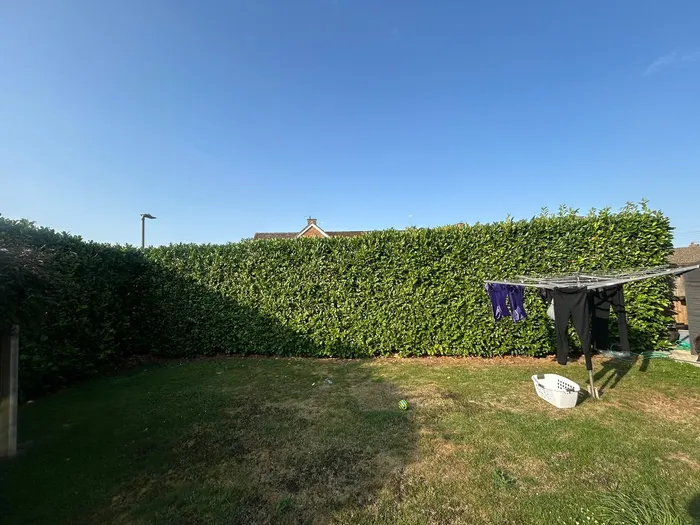
After a summer of growth, this long garden hedge in Flackwell Heath had lost its shape. The top had turned ragged and the sides were pushing out into the garden. The customer wanted the top and sides cleaned up so the hedge looked sharp again.
The work
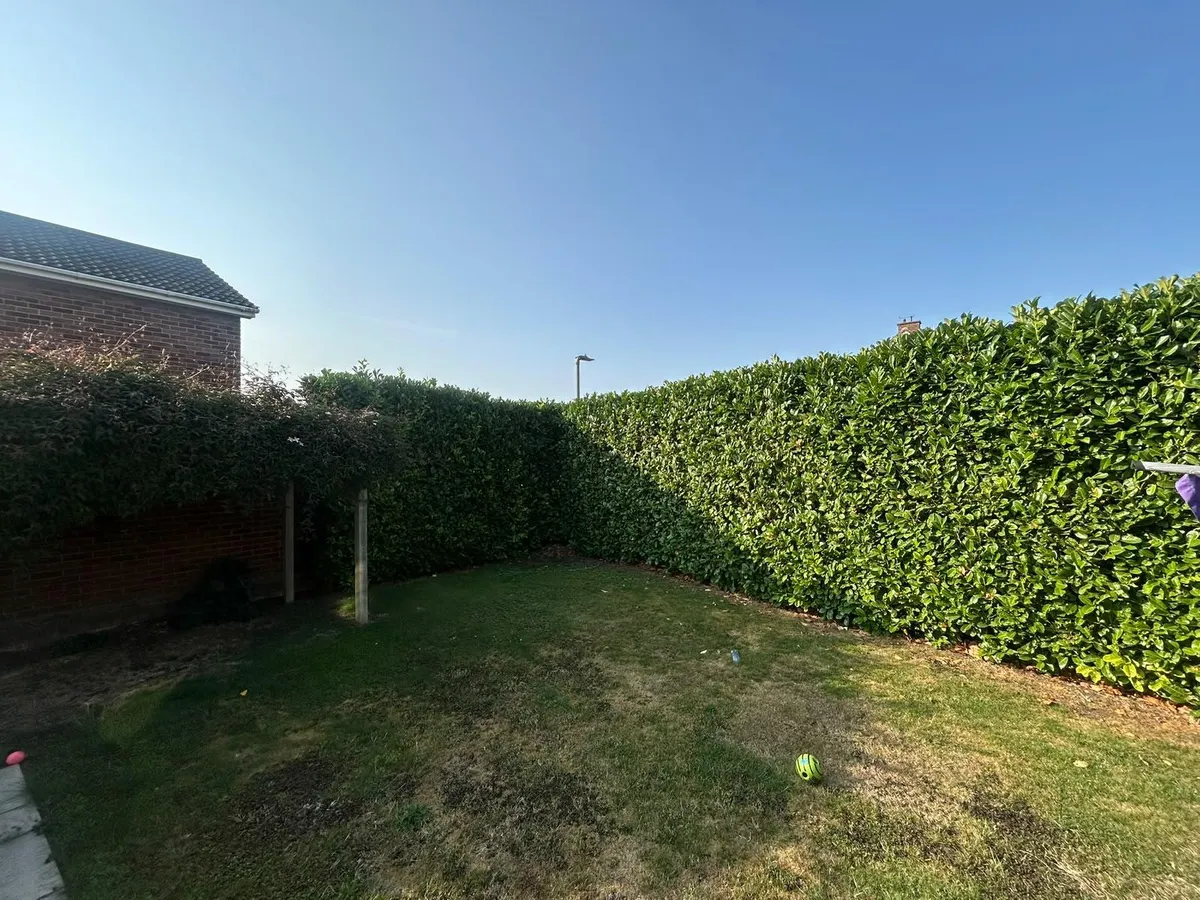
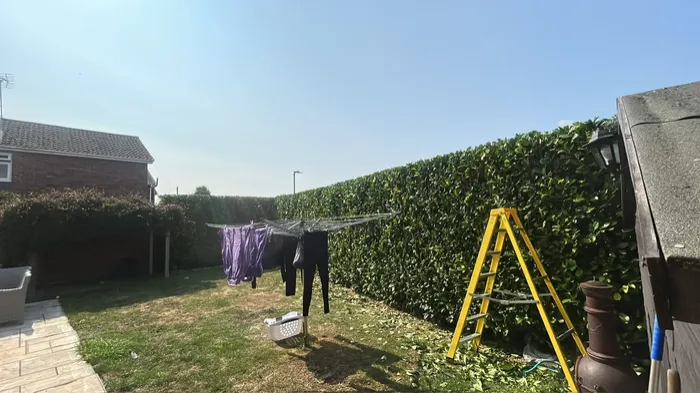
We trimmed the full run of the hedge, working from a stepladder to bring the top back to one flat, level line. Then we cut the sides back and straight, so the hedge stands square from the lawn to the top.
The result
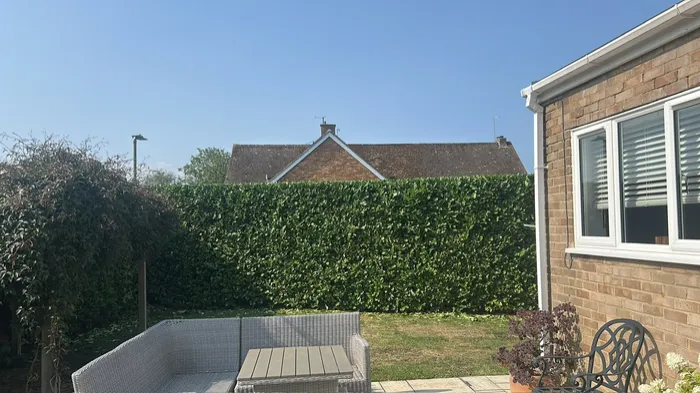
A crisp, even hedge along the back of the garden, with clean lines and a flat top, ready to grow back neatly.
Hedge lost its shape? See our hedge cutting and trimming, or call us to discuss your job.
FAQs
Hedge cutting questions
When is the best time to cut a hedge?
Most garden hedges get their main trim from late spring into summer, once the new growth has firmed up, then a lighter tidy in late summer so they stay neat through winter. Conifers such as leylandii are best finished by the end of August, as later cuts can leave bare patches. Deciduous hedges can also be cut back harder in winter, while they're bare. Try to avoid frosty spells and very hot, dry days. During the nesting season, we check the hedge for nesting birds before we start.
How often should a garden hedge be trimmed?
It depends on the hedge. Informal hedges usually need one cut a year, and formal hedges one to three. Privet and box may need two or three trims in the growing season, and laurel two. Yew and hawthorn need two, in summer and autumn, and beech and hornbeam usually just one, in mid to late summer. Conifers such as leylandii grow fast, so two or three light trims a year keep them in shape. Little and often is best, always staying in the green growth.
Can an overgrown hedge be cut back hard?
Many can. Beech, hornbeam, hawthorn, holly, box and yew can lose up to half their height and width in one cut. Deciduous hedges are best cut back in winter while they're bare, and evergreens in mid-spring. Most conifers, including leylandii, won't regrow from old brown wood, so they should never be cut back past the green growth. For a big reduction, cutting one side a year over two or three years is gentler on the hedge.
Can I trim my neighbour's hedge where it hangs over my garden?
Yes, but only up to the property boundary. If you do more than this, your neighbour could take you to court for damaging their property. If the hedge is in a conservation area or has a tree preservation order, you may need the council's permission first.
Still not sure? See more answers, or speak to us about your hedge.
Hedges getting out of hand?
We'll come and see the job and give you a price before any work starts. No obligation.