The job
Hedge cutting and reduction in Marlow
The brief
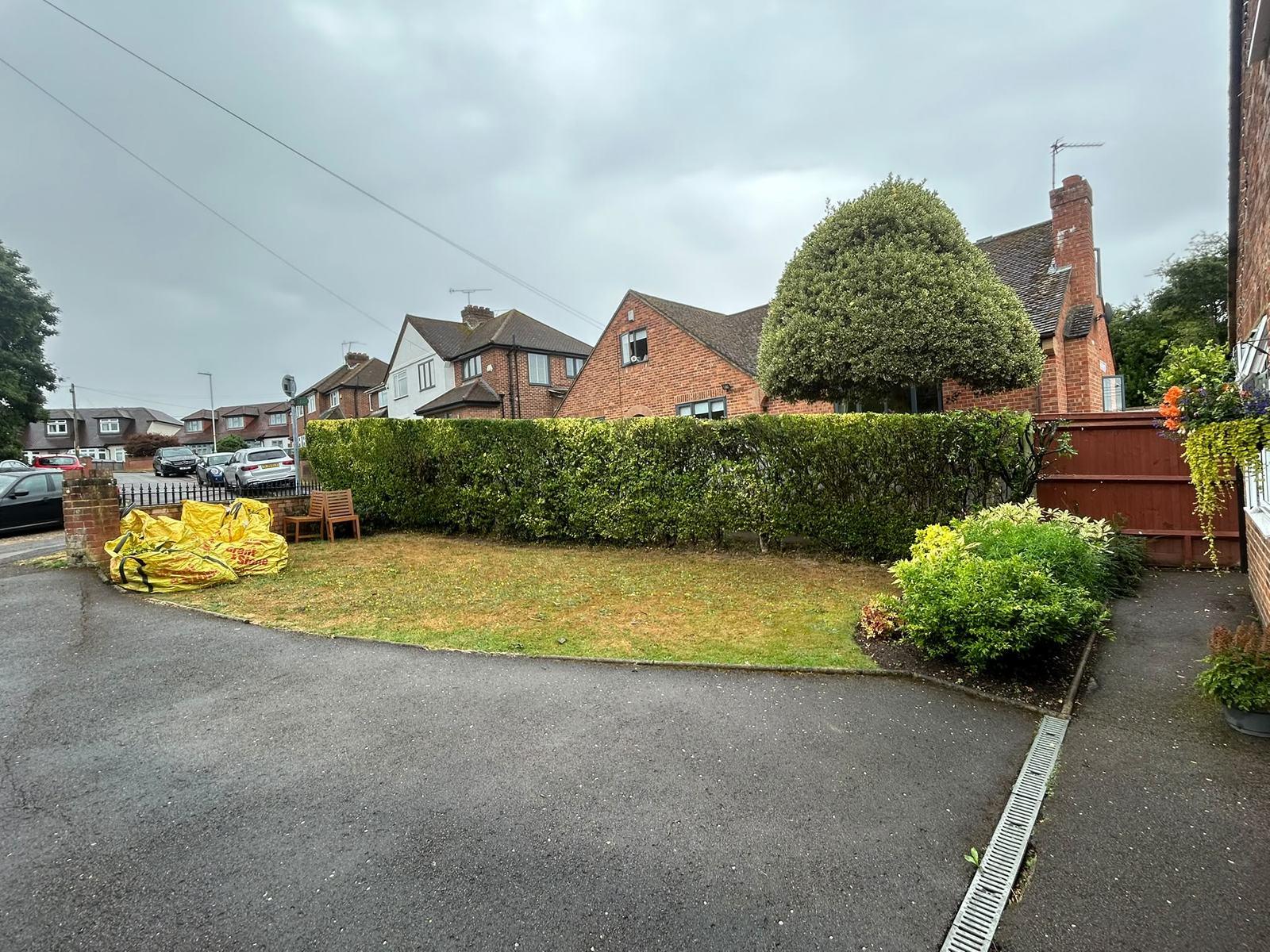
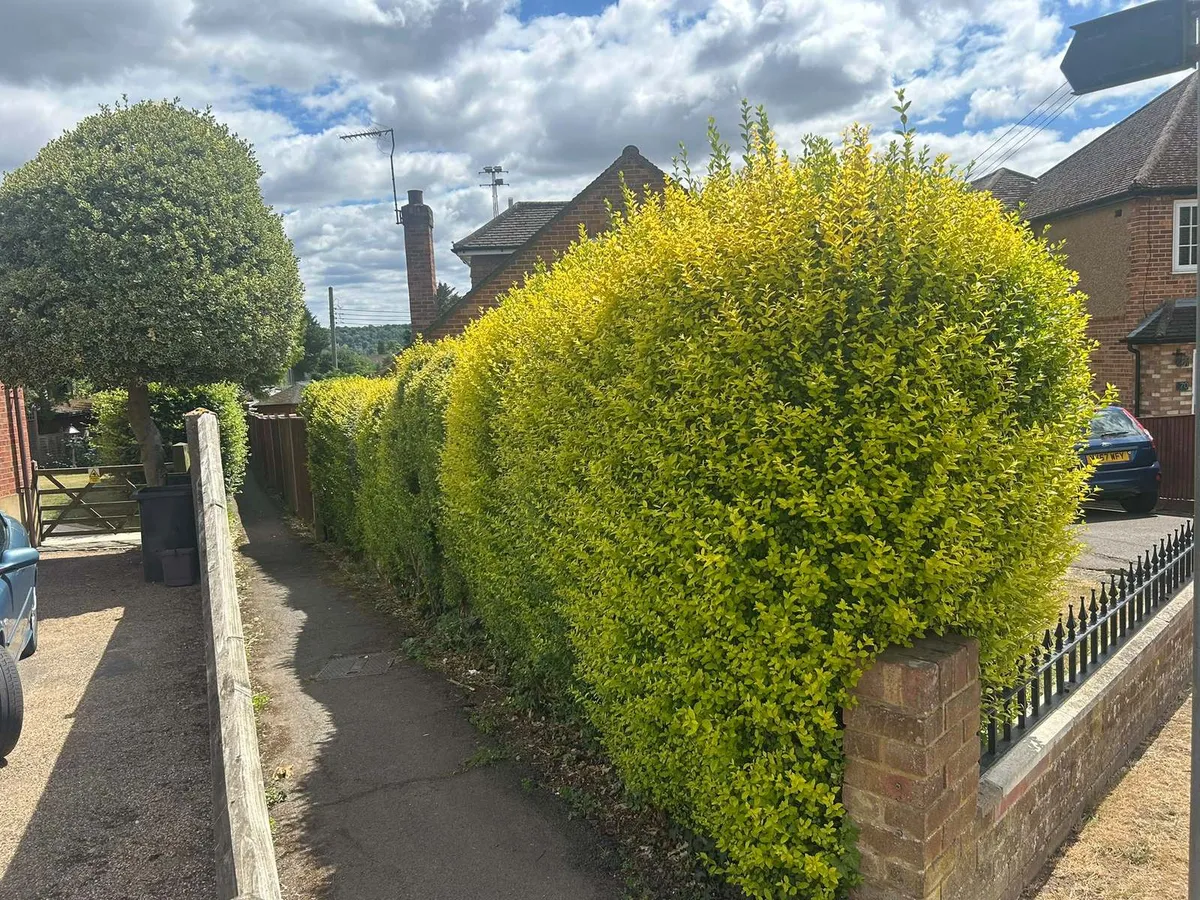
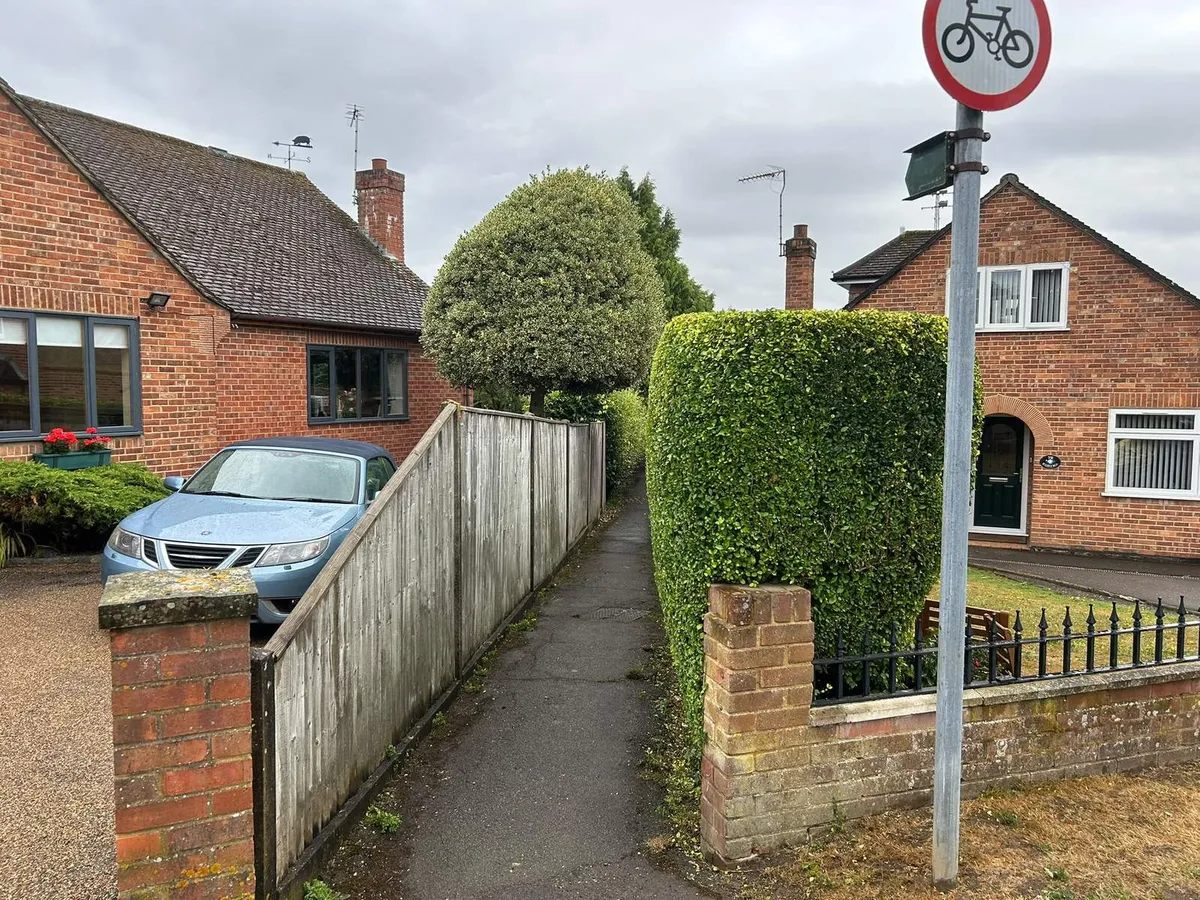
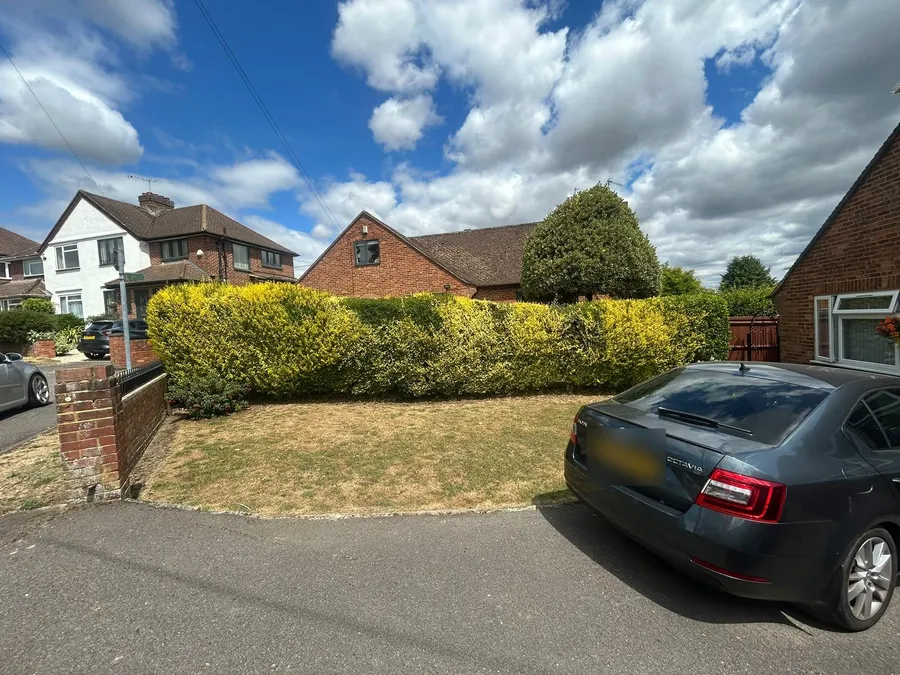
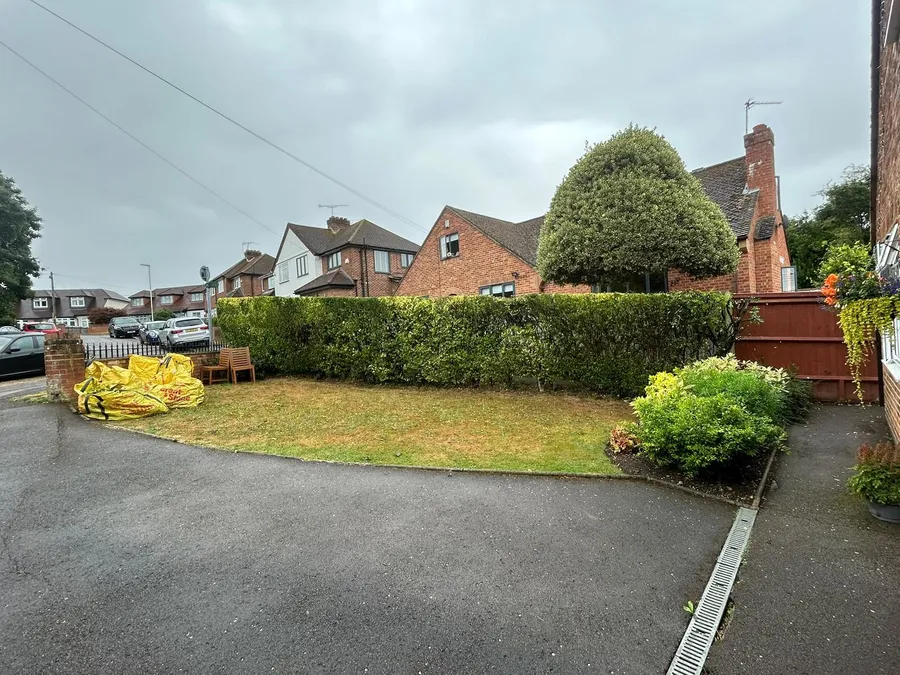
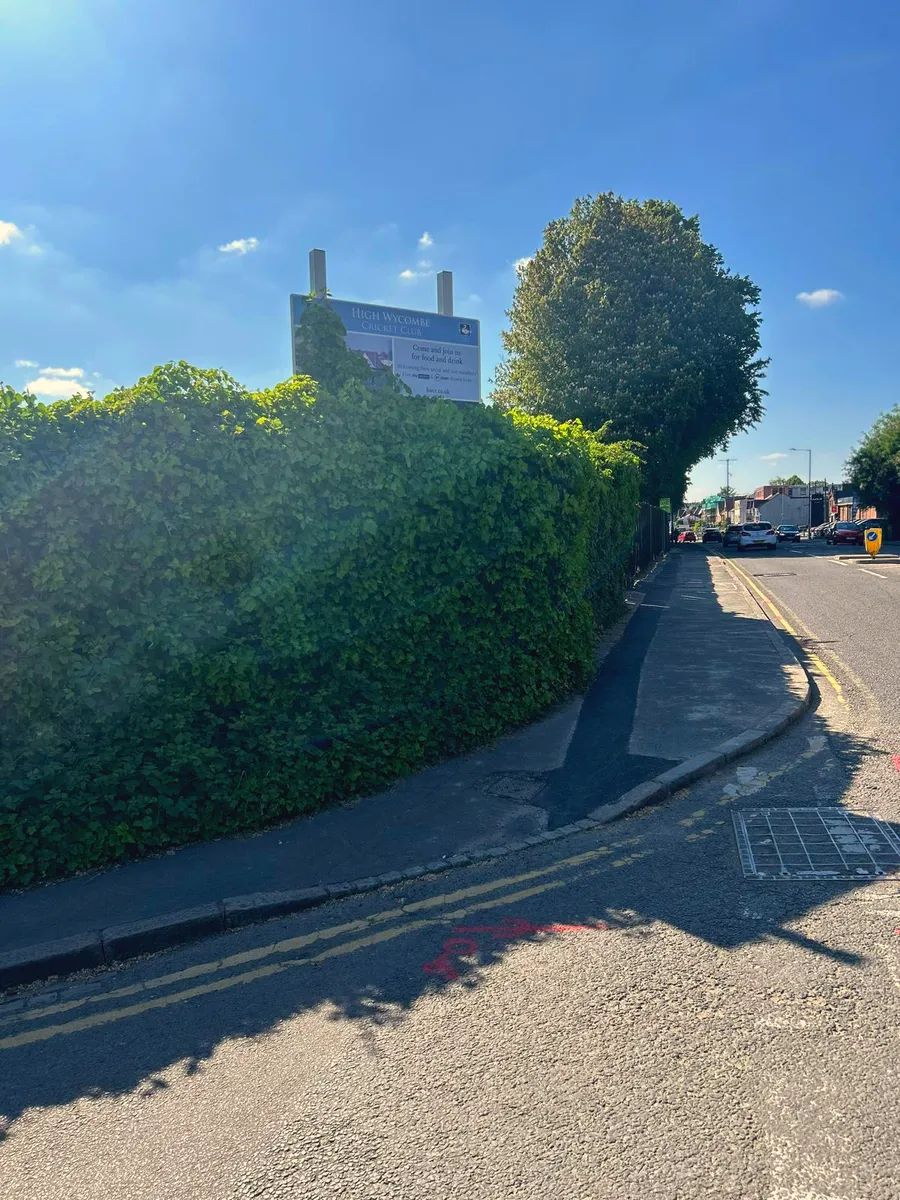
This front garden hedge runs along the lawn and down beside the alleyway footpath. By July it had grown out well past the wall and was bulging over the path, and the customer wanted it reduced and pushed back off the lawn and the footpath.
The work
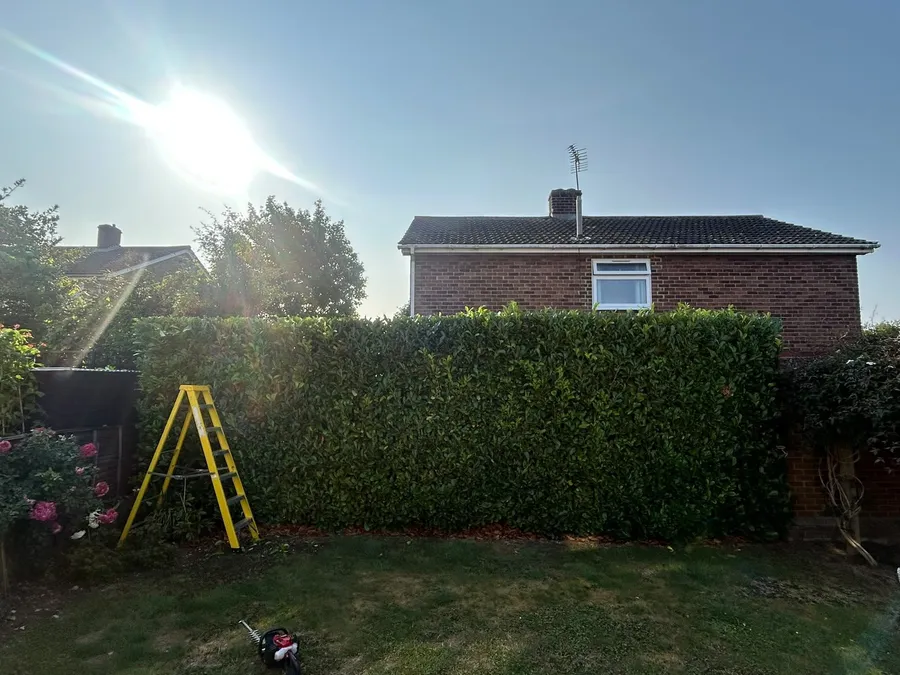
We cut the hedge back on the faces and brought the top down, taking off the loose yellow outer growth to the dense green underneath. Along the alleyway it now sits back behind the line of the wall with straight, flat sides, and along the lawn it has a level top and a clean edge above the grass.
The result
The footpath is clear again, and the hedge is smaller, tidier and back inside the garden. The customer kept the cuttings.
Hedge grown out over a path or lawn? See our hedge cutting and reductions, or call us to discuss your job. See more of our hedge cutting in Marlow.
Before and after
The lawn side, before and after
FAQs
Hedge reduction questions
What's the difference between a hedge trim and a hedge reduction?
A trim takes off the soft new growth from this year, so the hedge keeps the same size and shape. A reduction goes further: we cut back into older wood to bring the height down, pull the sides back in, or both. It's the job for a hedge that has crept out over a path, a lawn or a drive, or grown taller than you want, when regular trims alone won't bring it back.
Will my hedge look bare after it's been reduced?
For a while, it can. Cutting into older wood takes off the leafy outer layer, so the faces can look thinner and patchier than after a normal trim. Most broadleaf hedges, such as privet, laurel and beech, send out new shoots from the old wood and green over again. Golden hedges often look greener just after a cut, as the brightest colour is on the outer leaves. Conifers such as leylandii won't regrow from bare brown wood, so we only reduce them within the green.
How long does a hedge take to thicken up after a reduction?
In the growing season, most broadleaf hedges start putting out new shoots within a few weeks, and fill in over the following year. After that, regular trims just outside the last cut help it thicken up and hold its new size. A big reduction done in stages takes longer overall, but the hedge never looks too thin at any one time.
Can a hedge be reduced on one side only?
Yes, and it's often the better way. If only one face is a problem, such as a hedge growing out over a path, we can cut that side and the top back and leave the other side as it is. For a big reduction, doing one side one year and the other side the next is gentler on the hedge, as it keeps leaves on one face while the cut side grows back.
Still not sure? See more answers, or speak to us about your hedge.
Hedges getting out of hand?
We'll come and see the job and give you a price before any work starts. No obligation.